
No products in the cart.
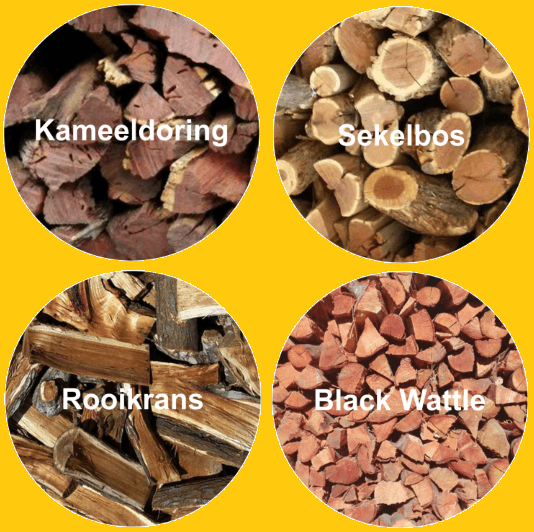
- Kameeldoring – Has the lowest moisture content, is extremely dry and heavy. It takes long to burn out and creates a large amount of hot burning coals. Almost smokeless and has a natural musky fragrance.
- Sekelbos – Is very popular, extremely dry and hardy. Commonly found throughout the country, and is, without a doubt, the best to use as it gives off intense heat, burns incredibly long, and also imparts a lovely smoky flavour to the meat.
- Rooikrans – Very popular in the Western Cape; It usually comes in log shapes and is also a great hardwood for a braai.
- Black Wattle – Very popular in the Western Cape; Easy to light, lasts extremely long, and provides that glowing coal.
Wood density
- Dense, heavy wood is ideal for a slower, more relaxed braai. It’s perfect when you’re not in a rush to get the fire going and prefer to enjoy the process—perhaps with a few cold drinks in hand.
- Hardwood burns hotter and longer, thanks to its density and slower combustion rate. As it continues to burn, the temperature increases, providing consistent heat for extended cooking. It also allows flexibility to rekindle the fire later, which is useful if guests arrive late.
- While dense wood may be more expensive and less readily available, its longer burn time means you’ll use less overall—often balancing out the cost and delivering better results. For quick-burning, high-flame fires like campfires or bonfires, softwood is a better choice, as it ignites easily and burns out quickly once the evening winds down.